There is still nothing quite like leather. I say this not as an observer, but as someone who has spent more than a decade tanning it. Leather has memory — it remembers its primordial function: to protect, to isolate, to contain, to comfort, to endure. In many ways, it is also a safe haven — a material we trust because it has proven itself over time.
So why am I promoting alternatives like the coated fabrics developed by Monteiro Fabrics within the Project Bioshoes4All?
Because both have their place.
My professional life has been shaped by materials: over a decade in leather tanning, nearly another decade vulcanizing rubber sheets, and more recently working with coated textiles. If anything, my background should bias me towards leather — and it does. But it also gives me enough perspective to recognize where coated fabrics make sense.
Material choice is a positioning decision
In reality, these materials do not directly compete — except in the simplistic view that both can be used in footwear. In practice, brands do not “choose between leather or coated fabric” at the end of development. They start there.
Material choice is a positioning decision:
- A premium segment that perceives leather as durable and worth the investment
- A price-sensitive segment constrained by cost and construction
- A consumer segment increasingly attentive to animal welfare, often associating “vegan” with sustainability
And this last point is critical. Even informed consumers often assume that “vegan” automatically means more sustainable or healthier. That is not always the case.
Take the example of VEJA. The brand has built a strong sustainability narrative, yet leather represented around 70% of its collection in 2020. The remaining share includes alternatives said to be cotton coated with bio-based resins, targeting vegan consumers and enabling different design and sourcing strategies. Interestingly, leather models are on average around 25% more expensive than coated alternatives, yet both sit within the same price segment — reinforcing that the choice is not purely economic, but also about positioning, storytelling and consumer targeting.
Why coated fabrics are widely used in footwear
Beyond positioning, there are concrete reasons why coated fabrics are widely used in footwear:
- Some designs would not exist without synthetics. As highlighted in Shoe Material Design Guide (Wade & Andrea Motawi, 2017), synthetic materials dominate modern athletic footwear, and many iconic designs rely on them to achieve their form, performance, and identity — a reality clearly reflected across brands like Adidas, Vans, Converse, New Balance, or Balenciaga.
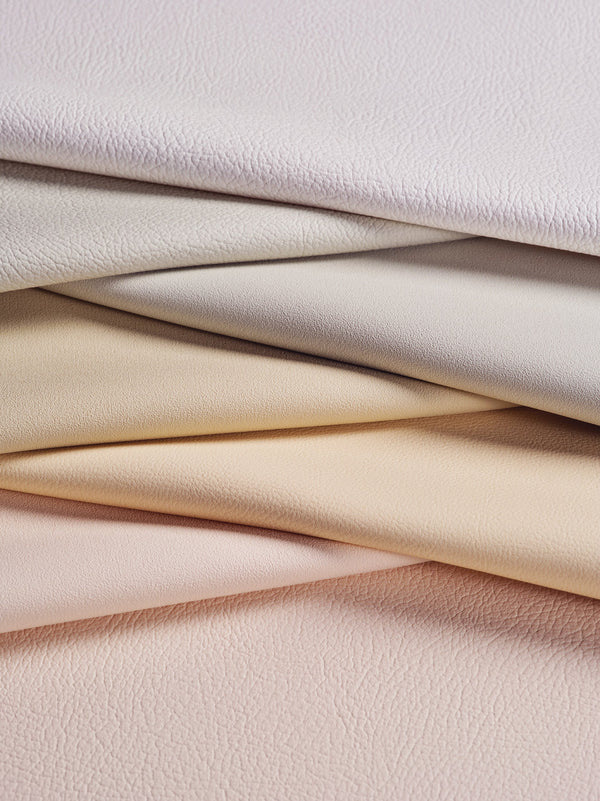
- Aesthetic freedom. Coated fabrics offer an almost unlimited range of colors, textures and finishes — metallics, gloss, tactile effects. Grab a Pantone and choose. While there is still a strong preference for leather grain aesthetics, the level of realism achieved today can challenge even specialists (even me).
- Lightweight performance. When supported by the right textile base, coated fabrics provide adequate strength and flexibility for most constructions, while enabling lighter products — often associated with comfort.
- Cutting efficiency. Produced in rolls (typically ~1.4 m width) with uniform structure, coated materials enable highly optimized cutting with waste typically below 10%. Leather, by contrast, generates around 25–35% waste in footwear manufacturing — a well-documented industry range — due to its irregular shape and natural defects, and requires manual surface assessment, limiting full automation.
- Automation limits. Unlike coated materials, leather cannot be blindly cut: each hide requires human inspection, constraining full automation and consistency.
- Cost efficiency and design freedom. Lower cost per surface allows designers to explore more complex, expressive patterns — curves, strips, bold constructions — that would be prohibitively expensive in leather.
- Ease of maintenance. Many coated fabrics are dirt-resistant and easy to clean.
- Animal-free positioning. They are a viable option for brands targeting vegan consumers.
- Specialized performance. Technical coated textiles can be engineered to deliver properties that leather cannot always provide — such as chemical resistance, impermeability, flame retardancy (ignifugal properties), or enhanced durability under extreme conditions. This makes them essential for safety footwear, military and special forces applications.
- A new generation is emerging. A new wave of coated textiles is emerging, with a shift from fossil-based inputs to renewable or recycled materials driving a reduced environmental footprint compared to conventional PU or PVC systems.
Staying realistic
We should remain realistic: mass footwear production is not sustainable, and shoes remain extremely difficult to recycle. There are no “magic green materials” that make a product fully sustainable. But that does not mean we cannot make better choices.
Recent developments also remind us to be cautious. As highlighted in the Financial Times article “The sustainable fabrics market collapse” (Annachiara Biondi, Nov 2025), several bio-based material start-ups have struggled after early enthusiasm. Companies such as Piñatex, Desserto, MycoWorks, Bolt Threads, Mirum, and Renewcell have faced scaling challenges, financial distress, or lack of commercial traction. Common issues included durability limitations, aesthetic constraints, processing difficulties (cracking, peeling, humidity sensitivity), and high costs versus conventional alternatives. Many brands could not move beyond pilot stages.
Innovation must be proven at scale
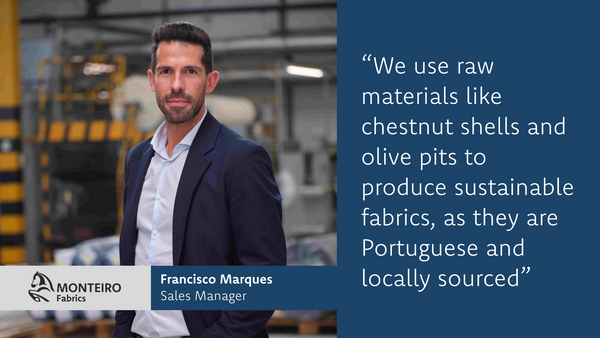
Innovation must be validated under industrial and market-proven conditions. Only what is proven at scale can deliver real impact — which is exactly what the transition to a bioeconomy demands. This is why I have been advocating for solutions like those developed at Monteiro Fabrics. They may not yet deliver a dramatic impact, but they represent a concrete step forward — with one solution already achieving an estimated 26% reduction in carbon emissions and 72% biobased content, while being industrially ready, tested in real footwear applications, and based on controlled, local, non-seasonal raw materials with consistent performance.
The wrong question
In the end, this is not about replacing leather. It is about understanding materials — their strengths, limitations, and appropriate use. Because in footwear, as in most things, there is no single right answer. Only informed choices.
By Luísa Sousa — Project Coordinator
Related fabrics
View collection →
Continue reading
All articles →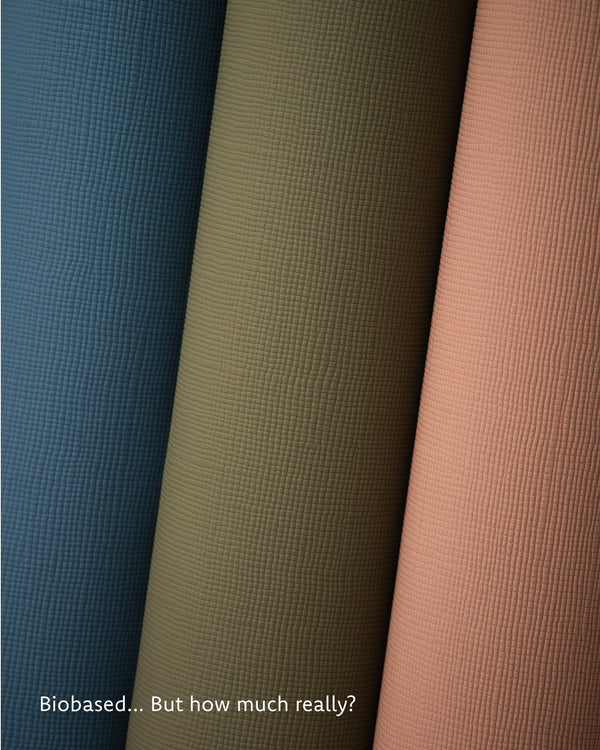
Need help specifying a fabric?
Tell us about your project and our team will recommend the right fabric and send samples.
Get in touch