The saloon of a yacht does not live an easy life. In a single season it faces direct ultraviolet radiation, salt spray, persistent humidity, splashes of chlorinated water from the pool and the deck, and a cleaning regime that few domestic fabrics would survive. A poorly specified material rarely fails dramatically — it fades, stiffens, cracks along the seams, or grows mildew in a damp corner. And on board, replacing it means a yard visit, downtime, and a cost far greater than the fabric itself.
Specifying well for the marine environment is, therefore, less a matter of taste and more a matter of engineering. This guide walks through what genuinely distinguishes a marine fabric, the decisive difference between interior and exterior use, and the standards you should demand before signing off a specification sheet.
The marine environment is a stress test
Before looking at colours and textures, it is worth recognising the forces a fabric faces on board — all at once:
- UV radiation and light ageing. Light reflected off water is relentless. Without proven light stability, colours fade and the coating grows brittle.
- Salt and sea spray. Salt settles, crystallises and attacks both the surface and the colour. Sea-water colour fastness is not an extra — it is the starting point.
- Humidity and chlorinated water. Cabins, wet zones and areas beside the pool combine constant humidity with splashes of chemically treated water.
- Abrasion. Seating used intensively in tight spaces demands high resistance to wear.
- Fire on board. On a vessel, the reaction-to-fire of interior materials is regulated — not a recommendation.
A good marine fabric answers all of these demands simultaneously. This is why coated technical fabrics, with their sealed surface, have become the reference material for marine interiors: they are impermeable, easy to clean, and have no open fibres where salt, moisture and micro-organisms can take hold.
Interior is not exterior — the distinction that changes everything
This is the most common specification error, and the one that produces the most unpleasant surprises: assuming that a fabric "recommended for marine use" is fit for any zone of the vessel. It is not. A fabric designed for the cushions of an interior cabin can be entirely unsuitable for an open-deck seat exposed to sea spray and hours of direct sun.
The difference starts with the base material, beneath the coating:
- A polyester (PES) base resists humidity better and is the right choice for exposed zones — covered deck, poolside areas, exterior.
- A cotton (CO) base offers excellent hand and structure for dry interiors — saloons, cabins, dining areas — but is not the option for continuous exposure to water and humidity.
For the most demanding zones — open deck, exterior, wet areas — the properties to demand go beyond sea-water colour fastness:
- Hydrostatic resistance (ISO 811) — the ability to resist water passing through under pressure.
- Low-temperature resistance / cold crack — the coating must not fissure at low temperatures (some ranges are tested to −30 ºC).
- Artificial weathering and light fastness (blue scale) — to withstand prolonged sun exposure without fading.
In short: for the interior, fire compliance is the non-negotiable requirement; for the exterior and wet zones, add a polyester base, hydrostatic resistance, cold crack and proven weathering. Specifying an interior fabric for a deck application is a false economy that is paid for in the first season.
Fire safety on board: the IMO standard
In a building, a fabric's reaction to fire matters. On a vessel, it is regulated internationally. The reference is the IMO 2010 FTP Code, Part 8 (International Maritime Organization — Fire Test Procedures Code), which sets the fire-test procedures for upholstered furniture on board ships.
Every Monteiro Fabrics fabric recommended for the marine sector is tested to the IMO 2010 FTP Code Part 8. Depending on the collection, further reaction-to-fire classifications relevant to international projects apply — for example EN 1021-1+2 (ignitability of upholstered furniture, cigarette and match flame), NF P 92-507 (M2) in France, BS 5852 Crib 5 for severe-risk contract seating in the UK, or UNI 9175 (1.IM) in Italy. The exact certifications vary by collection — always confirm per product on the relevant datasheet.
The properties to specify (checklist)
When evaluating a fabric for a marine project, demand documented evidence for each point:
- Colour fastness to water, chlorinated water and sea water — in Monteiro's marine ranges, assessed on the grey scale to ISO 105-E01/E02/E03.
- Light fastness and weathering — blue scale; artificial weathering on the exterior ranges.
- Abrasion resistance — the Martindale method (ISO 5470-2). Monteiro's severe-contract ranges reach 400,000 cycles.
- Hydrostatic resistance (ISO 811) — essential for exterior and wet zones.
- Low-temperature resistance (cold crack) — for vessels exposed to low temperatures.
- Antibacterial and antifungal properties — in Monteiro's ranges assured by the Sanitized® treatment, a real advantage against mildew in humid environments.
- Reaction to fire — IMO 2010 FTP Code Part 8, at minimum.
- Ease of cleaning and responsible composition — a surface washable with mild detergent and a damp cloth; 100% vegan, REACH compliant, phthalate-free and the Animal Free LAV VVV+ rating.
Which fabric for which zone
The Monteiro Fabrics range covers everything from the exposed deck to the interior saloon. The values below are drawn from each collection's datasheet.
| Collection | Base | Weight | Abrasion (Martindale) | Marine highlights | Recommended zone |
|---|---|---|---|---|---|
| Patio | PVC 81% · PES 19% | 700 g/m² | ≥400,000 | Hydrostatic (ISO 811), cold crack −30 ºC, artificial weathering, sea-water fastness, IMO FTP Part 8 | Exterior / exposed deck |
| Siesta | PVC 81% · PES 19% | 700 g/m² | 400,000 | Cold crack, sea- & chlorinated-water fastness (ISO 105-E01/E02/E03), light fastness, IMO FTP Part 8 | Exterior and deck seating |
| Ocean | PVC 80% · PES 20% | 690 g/m² | 400,000 | Fastness to sea, chlorinated water, oil and sun cream; artificial light (ISO 105-B02); IMO FTP Part 8; M2 | Exterior / pool and sun areas |
| Marina | PVC 80% · PES 20% | 690 g/m² | 400,000 | Woven-textile look; sea- & chlorinated-water fastness; antibacterial/antifungal Sanitized; IMO FTP Part 8; M2 | Interior and semi-exterior |
| Furna / Portus | PVC 83% · CO 17% | 760 g/m² | 400,000 | Premium hand and structure; IMO FTP Part 8; BS 5852 Crib 5; M2; 10-year warranty | Interior (saloons, cabins) |
Rule of thumb: a polyester base (Patio, Siesta, Ocean, Marina) for anything that meets water, salt or direct sun; a cotton base (Furna, Portus) for the comfort and elegance of dry interiors. For a cabin or interior saloon where hand and finish are the priority, a contract collection with IMO compliance is the right choice; for a deck seat, demand the exterior range with hydrostatic resistance and cold crack.
Aesthetics without compromise
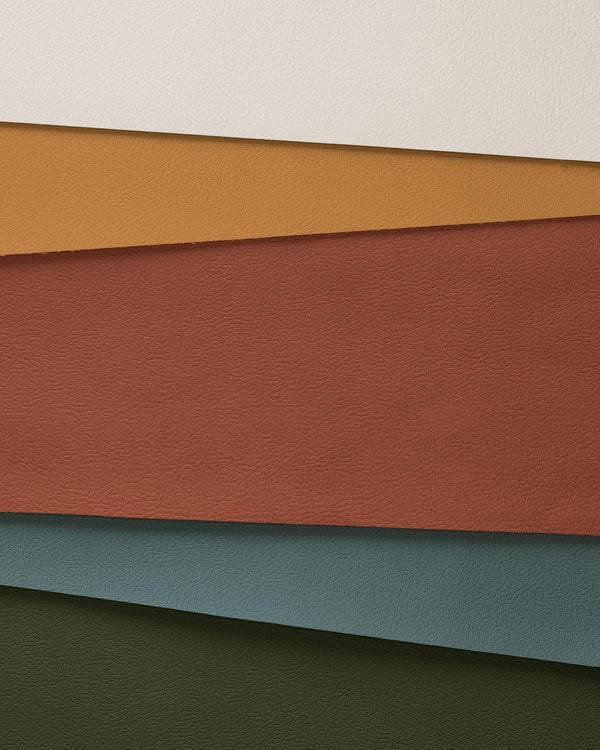
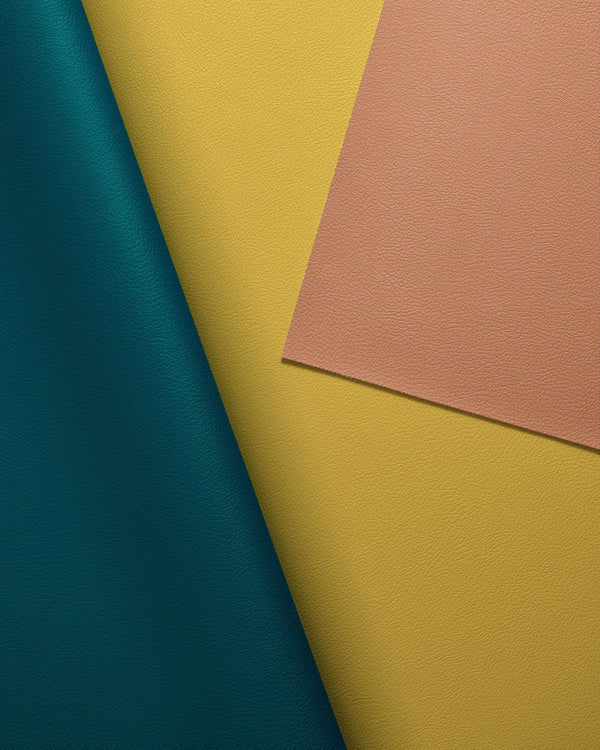
Performance does not require giving up design. The same marine ranges offer everything from woven-textile looks (Marina, Siesta) to leather-grain finishes (Patio), in a palette built for contemporary interiors. For projects that call for a bolder chromatic signature inside, collections such as Chance — one of the most colourful on the European market — open a range of expression that leather can hardly match, while keeping the surface washable and the technical compliance intact.
When the specification calls for something bespoke
The right reference does not always already exist in the right colour. It is common for a designer to identify the ideal texture but need a specific shade to harmonise with the project. In those cases, Monteiro Fabrics' tailormade capability and colour-matching technology make it possible to develop the colour from a sample, with a lab dip for approval or a pilot sample before production — keeping the underlying technical properties intact.
The informed choice
There is no "magic" fabric that suits every point of a vessel. There is, however, the right material for each zone — and the difference between a sound choice and an expensive mistake lies in the technical detail: the base, sea-water fastness, hydrostatic resistance, cold crack and IMO compliance. Specifying on the basis of evidence is what ensures the upholstery is as beautiful and functional in its fifth season as on the day it was delivered.
If you are developing a marine project, we can help match the exact specification to the application zone — and send free samples of the relevant ranges for evaluation.
Related fabrics
Continue reading
All articles →
Need help specifying a fabric?
Tell us about your project and our team will recommend the right fabric and send samples.
Get in touch