Did you know it is possible to determine the biobased content of a material with high accuracy?
The most widely used method is based on identifying how much of the carbon present in a material comes from fossil sources and how much comes from recent biological sources.
Carbon is an abundant element, but one of its isotopes — carbon-14 (C¹⁴) — plays a unique role. This radioactive isotope is naturally present in the atmosphere and continuously incorporated into living organisms through the carbon cycle. As a result, recent biomass contains a known and measurable proportion of C¹⁴.
In contrast, fossil materials (such as petroleum-derived products) are millions of years old. Over time, their C¹⁴ content has completely decayed, leaving only stable carbon isotopes.
👉 This means that: the presence of C¹⁴ is a direct marker of renewable (biobased) carbon
By measuring the amount of C¹⁴ relative to total carbon in a material, it is therefore possible to determine the proportion of carbon originating from biological sources.
This is the principle behind internationally recognised standards such as ASTM D6866-22.
How is C¹⁴ measured?
C¹⁴ is quantified using radiocarbon analysis techniques, most commonly Accelerator Mass Spectrometry (AMS), which allows for highly precise measurement of carbon isotopes.
For complex or multi-layer materials — such as coated textiles — proper sample preparation is essential. In some cases, this may involve separating components (e.g. textile substrate and coating) to obtain more representative results.
Why does this matter?
The transition to a bio-based economy relies on replacing fossil-derived materials with renewable alternatives. Ensuring the credibility of these claims is therefore critical.
C¹⁴ analysis provides:
- objective validation of biobased content
- transparency across the value chain
- a robust tool to combat greenwashing
Application in coated textiles
At Monteiro Fabrics, coated textile solutions with increased renewable content have been developed through the integration of bio-based polymers, bio-plasticisers, fibres derived from agricultural residues, and textile backings based on vegetable fibres.
These developments have been validated according to ASTM D6866, demonstrating biobased carbon contents ranging from 65% to 72%, while maintaining the functional performance and durability required for upholstery applications.
Final thought
As sustainability claims become more central to material innovation, measurable and verifiable metrics such as C¹⁴ analysis are essential to ensure credibility and support meaningful progress.
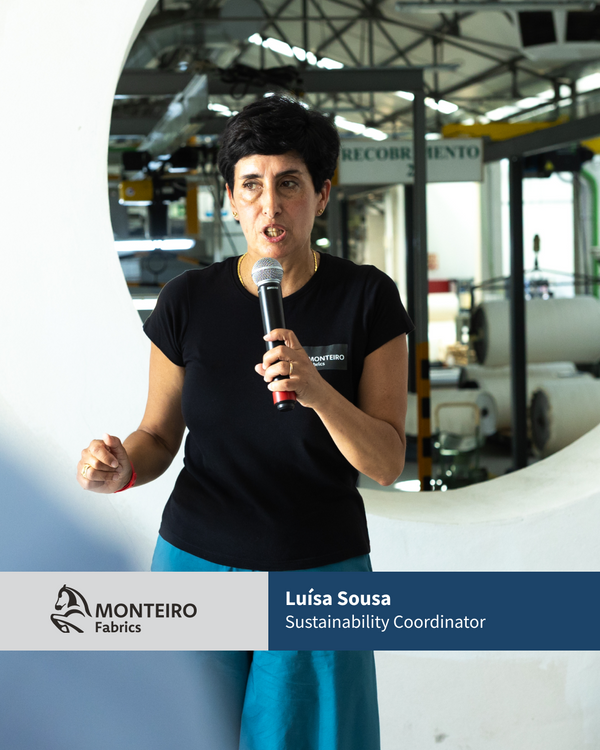
By Luísa Sousa - Project Coordinator
Related fabrics
View collection →
Continue reading
All articles →

Need help specifying a fabric?
Tell us about your project and our team will recommend the right fabric and send samples.
Get in touch